Saily has quickly become a well-known travel eSIM option, offering coverage across more than 200 destinations with fixed and unlimited plans available depending on the location.
It was created by Nord Security, the company behind NordVPN, and that background is reflected in features such as web protection, ad blocking, and virtual location built into the service.
In this Saily eSIM review, we’ll break down the service itself, including plans, pricing, unlimited-data limits, hotspot use and other key features. We’ll also explain how Saily performed when we tested it in São Paulo, including setup, connectivity, the app and customer support.
The goal is to separate the objective parts of the product from our own experience, then compare Saily with other travel eSIM providers where that helps. By the end, you should have a clearer idea of how Saily works and whether it makes sense for your trip.
For more help comparing providers, choosing a plan, or using an eSIM, explore our eSIM guides, reviews, and comparisons.
Contents
Saily eSIM at a glance
Saily is a fairly complete travel eSIM service, with both fixed-data and unlimited plans available across country, regional and global options. Unlimited plans are available in many popular destinations, although not everywhere. Saily’s overall coverage extends to more than 200 destinations.
| Feature | Saily |
| Coverage | 200+ destinations |
| Plan types | Fixed + unlimited |
| Country / regional / global plans | Yes |
| Hotspot | Unrestricted (subject to plan fair-use limits) |
| Calls & SMS | Standard plans are data-only; optional U.S. number available |
| 5G | Available depending on the local network |
| Security features | Virtual location, ad blocker, web protection and adult site blocking |
| Reusable eSIM | Yes, add future destinations to the same eSIM |
| Top-ups | Yes, for fixed-data plans |
| Best suited to | Travellers wanting a polished all-round eSIM with useful security features |
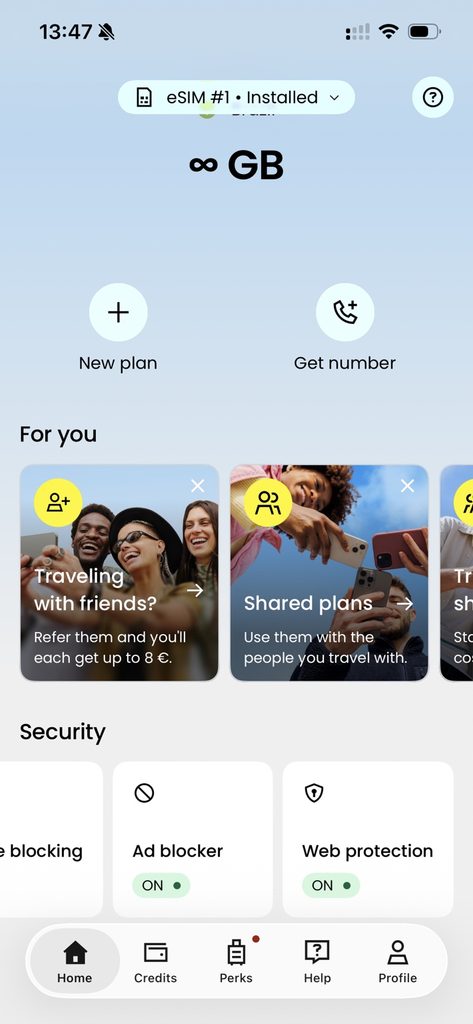
Saily’s app brings most of this together in one place. From the home screen, you can see your active plan, buy a new one, add a phone number, access security tools and manage the same eSIM for future trips.
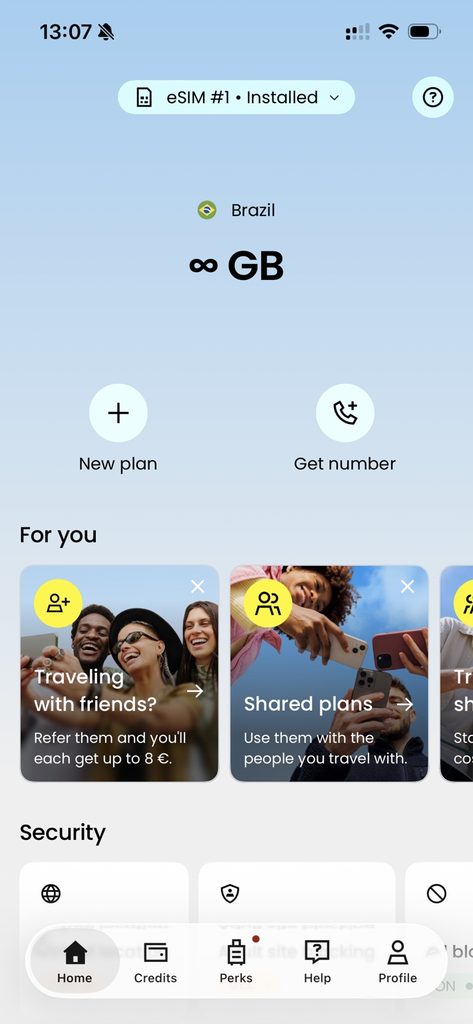
One thing to keep in mind is that Saily’s unlimited plans have destination-specific fair-use limits. In the plans we checked, Brazil included 3 GB of unrestricted-speed data per day before speeds were reduced to up to 1 Mbps, while Spain and Japan included 5 GB per day before the same reduction.
How does Saily eSIM work?
Saily is managed through its mobile app. After downloading the app and creating an account, you choose your destination, select a fixed-data or unlimited plan where available, and complete the purchase directly in the app.
From there, Saily guides you through installation:
- Tap Set up eSIM in the Saily app.
- Choose whether you want to install it on your current phone or another device.
- Follow the installation prompts. On iPhone, Saily redirects you to your device settings to add and activate the eSIM profile.
- Once installation is complete, select the Saily eSIM as your mobile-data line.
- Enable Data Roaming on the Saily line when required.
When we installed Saily on an iPhone 17e, the whole process took around five minutes. The app gives clear instructions throughout, although selecting the correct eSIM for mobile data and enabling roaming are important final steps.
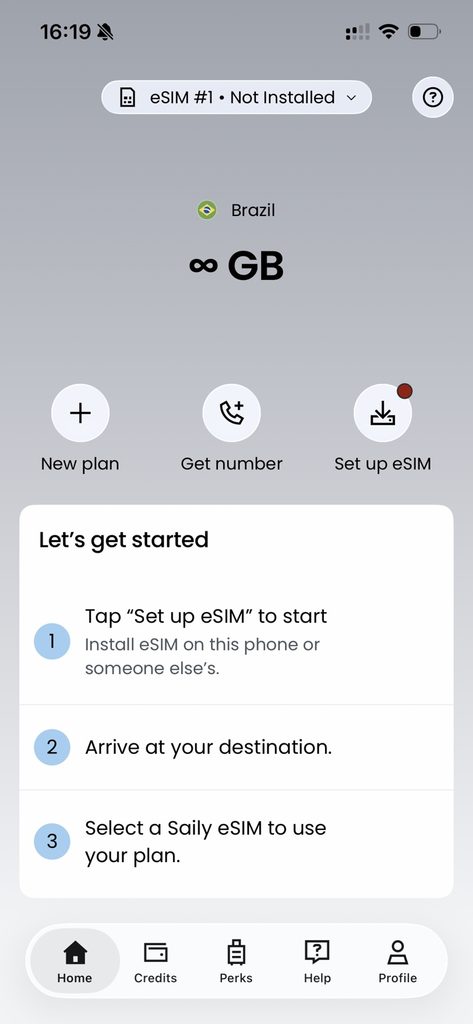
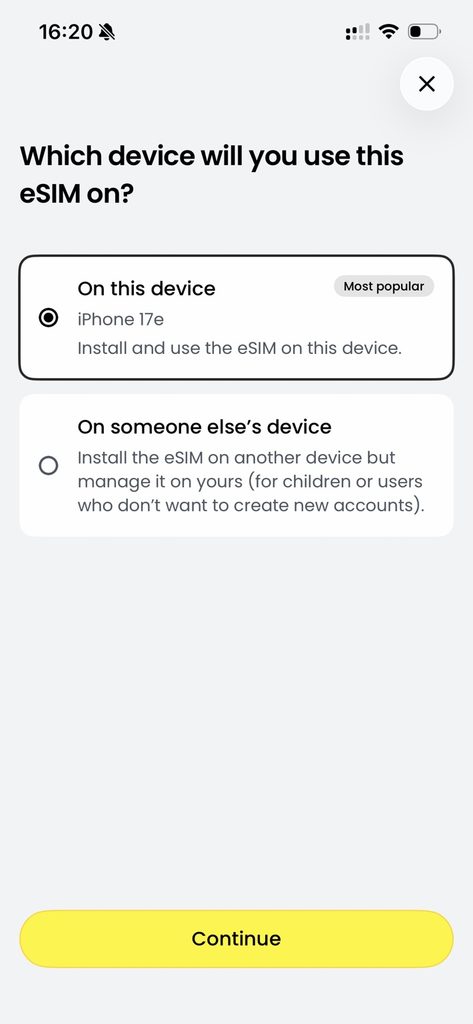
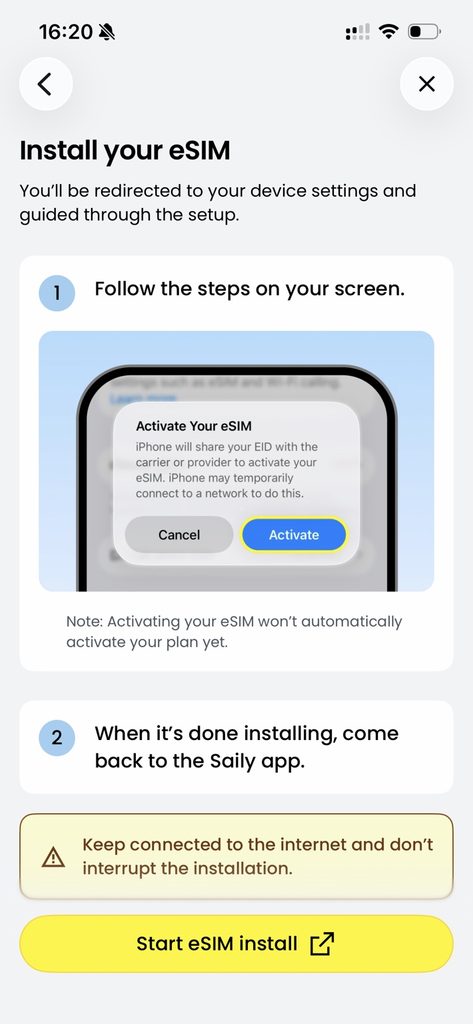
If you want a more detailed walkthrough of the device settings involved, our How to install an eSIM guide covers the full process for iPhone and Android.
One useful feature is that you don’t need to install a new Saily eSIM for every trip. Once the profile is on your phone, you can keep it installed and add plans for new destinations later.
Saily also allows you to install the eSIM before departure without necessarily starting the data plan immediately. The plan normally activates when you reach a supported destination and the eSIM connects to the network, although it’s still worth checking the activation details for your specific plan before installing.
Saily plans and pricing
Saily offers both fixed-data and unlimited plans, with country-specific, regional and global options available. Unlimited plans aren’t offered in every destination, but they are available in many popular countries.
Fixed-data plans usually range from smaller allowances for short trips to 20 GB or more for longer stays. Pricing varies by destination. When we checked, representative options included:
| Destination | Fixed-data example | Unlimited example |
| Spain | 20 GB / 30 days – US$22.99 | 15 days – US$43.99 |
| Japan | 20 GB / 30 days – US$24.99 | 15 days – US$48.99 |
| Brazil | 20 GB / 30 days – US$39.99 | 15 days – US$48.99 |
Saily’s unlimited plans are subject to fair-use limits that vary by destination, so it’s worth checking the technical details for your specific plan before buying.
Fixed-data plans can be topped up if you run low, which is useful if you underestimate how much data you’ll need during the trip.
One limitation is that fixed-data plan durations can be less flexible than some competitors. For destinations such as Spain, Italy and Greece, Saily commonly offers 7-day or 30-day fixed plans, while Airalo can offer additional durations such as 3 and 15 days depending on the destination.
If you’re unsure how much data to buy, our How Much Data Do You Need While Traveling? guide can help you choose the right allowance before your trip.
How Saily performed in testing
We tested Saily with a Brazil unlimited eSIM on an iPhone 17e in São Paulo. Setup was straightforward, but connectivity was inconsistent during the first day.
Saily initially connected automatically to local Brazilian networks including Claro and TIM. 5G performance was patchy, and LTE worked more reliably. After contacting support, we deleted the eSIM from the iPhone, reinstalled it through the Saily app, and the connection improved noticeably.
We also tried manually selecting Vivo, another major Brazilian mobile network, instead of leaving network selection on automatic. That helped, although Saily still didn’t feel as fast or consistent as the Holafly eSIM we tested in the same area. Holafly connected to Vivo automatically and maintained a stronger 5G connection.
This is only one local test, so it shouldn’t be treated as evidence that Holafly will always outperform Saily. Network performance can vary by location, local carrier and roaming arrangements.
Saily app and customer support
The Saily app is one of the stronger parts of the service. It has a clean interface and makes it easy to see your active eSIM, buy a new plan, add a U.S. phone number, access your Saily credits and manage the built-in security features.
Once your eSIM is installed, you can also keep the same profile and add plans for new destinations rather than installing a completely new eSIM for every trip.
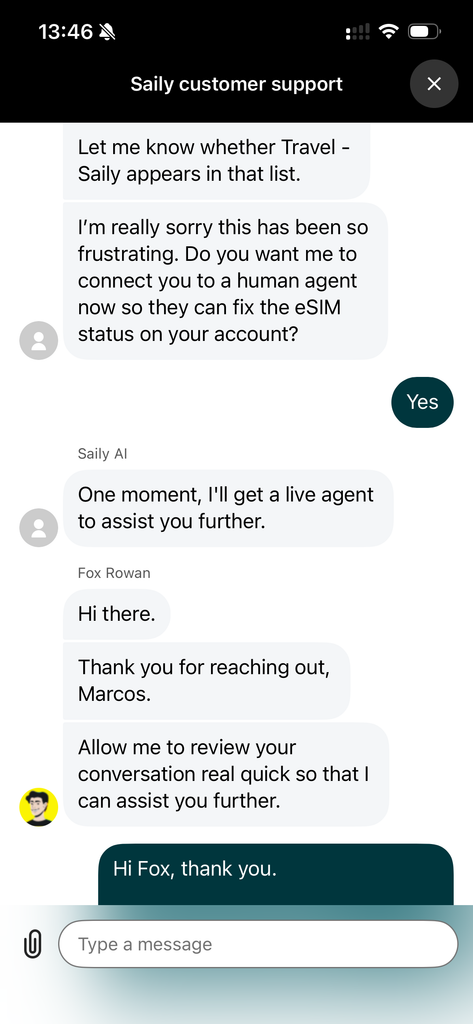
Customer support is handled through the app. You initially chat with Saily’s AI assistant, which can troubleshoot common problems and access basic information about your plan. If the AI can’t resolve the issue, or you ask to speak to someone, it can transfer the conversation to a human agent.
That worked well during our testing. When we had connectivity problems with the Brazil eSIM, the AI walked through several troubleshooting steps before connecting us to a live agent. Human support responded quickly and continued from the existing conversation rather than making us start again.
We also asked whether the plan could be extended to compensate for the connectivity problems during the first day. Saily couldn’t extend the plan, but support added US$5 in Saily credits to the account instead.
Overall, the app feels polished and easy to use, while the AI-to-human support workflow worked smoothly in our experience. The support team didn’t provide the exact resolution we requested, but the response was quick and they offered a reasonable alternative.
Saily security features
One of Saily’s main differentiators is that several security tools are built directly into the service. Every plan includes ad blocking, web protection and virtual location at no extra cost, while the app also includes an adult-site blocking option.
The controls are easy to manage from the Saily app, so you can switch individual features on or off depending on what you want to use.
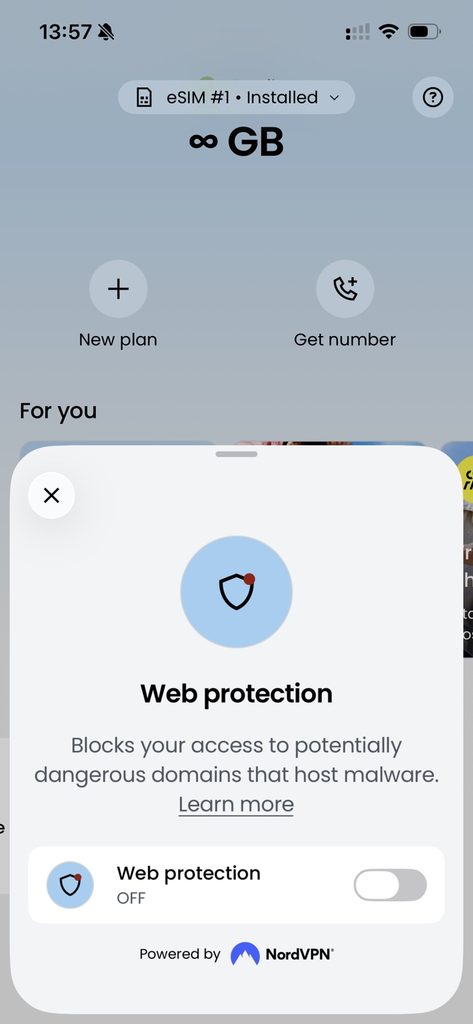
For more detail on how each feature works, Saily explains them on its official security features page.
How calls and SMS work with Saily
Saily’s standard eSIM plans are data-only, so they don’t include regular cellular calls, SMS or a local phone number.
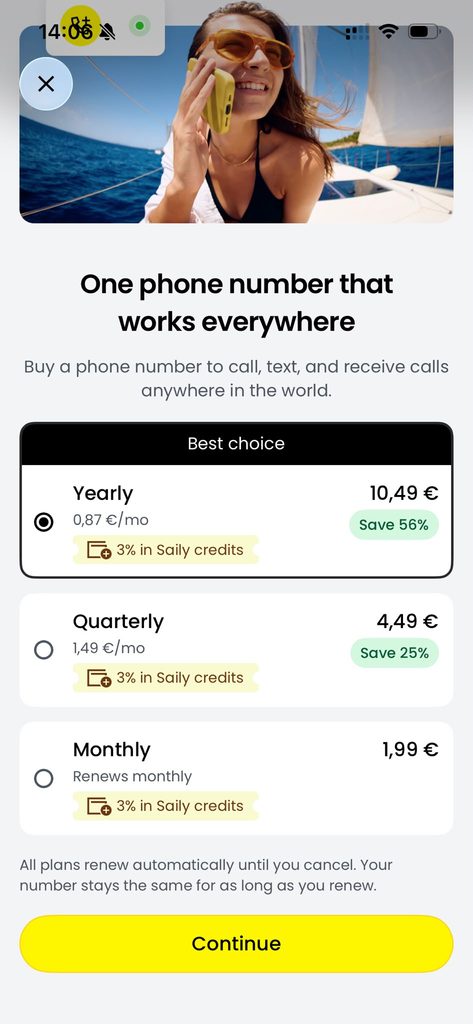
You can, however, add a separate U.S. (+1) number through the app. Although it’s an American number, it can be used while travelling internationally because calls and texts are handled over the internet rather than through a U.S. mobile network. The number stays the same as you move between countries and use different Saily data plans.
It supports calls and SMS, although OTP/2FA compatibility isn’t guaranteed and MMS isn’t supported.
What does Saily do well?
Saily gets several important things right:
- The app is polished and easy to use. Buying a plan, installing the eSIM, checking your data and adding another destination are all handled in one place.
- There’s a strong choice of plans. Saily offers fixed and unlimited data across country, regional and global options, although unlimited plans aren’t available everywhere.
- The built-in security features add real value. Ad blocking, web protection, virtual location and adult-site blocking give Saily something most travel eSIMs don’t include by default.
- It works well for repeat travel. You can keep the same Saily eSIM installed and add new destinations later instead of installing a fresh profile for every trip.
Where does Saily fall short?
Saily is a strong all-round option, but there are a few limitations:
- Unlimited plans aren’t available everywhere. They’re offered in many popular destinations, but availability still depends on the country. Fair-use limits also vary, such as 3 GB of unrestricted-speed data per day in Brazil versus 5 GB in Spain before speeds drop to up to 1 Mbps.
- Fixed-data plan durations can be less flexible than some competitors. In destinations we checked, Saily often offered 7- or 30-day fixed plans, while providers such as Airalo sometimes add shorter or intermediate options.
- Connectivity can depend heavily on the local network. In our São Paulo test, Saily required some troubleshooting and manual network selection before performance improved. That was one local experience rather than a universal problem, but it’s worth keeping in mind.
If one of those limitations matters for your trip, our Saily alternatives guide compares other providers based on specific traveller needs.
Is Saily worth it?
Saily makes the most sense for travellers who want a polished, easy-to-use eSIM with a good mix of fixed and unlimited plans, strong security features and the flexibility to reuse the same eSIM across future trips.
It isn’t the best fit for every situation. Unlimited plans aren’t available everywhere, fixed-plan durations can be less flexible than some competitors, and our São Paulo test showed that local network performance can vary.
Overall, Saily is a strong all-round travel eSIM and one of the better options for travellers who value simplicity, app quality and built-in security features. If your trip has more specific requirements, such as group travel, integrated calls and SMS or different plan structures, it’s worth comparing the alternatives before deciding.
You can also see how Saily compares with other major providers in our Best eSIMs for Travelers guide.
Leave a Reply